
The HSBC Markit Services Purchasing Managers' Index fell to 51.7 in June from May's three-month high of 53.6, in a sign that Asia's third-largest economy is still struggling to climb out of a quagmire of low growth and high inflation.
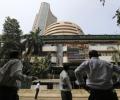
Top gainers in the Sensex pack included IndusInd Bank, ITC, L&T, M&M, PowerGrid, Asian Paints and SBI, ending up to 3.79 per cent higher.

Top losers in the Sensex pack included ICICI Bank, Tata Steel, Vedanta, HDFC IndusInd Bank, Tata Motors, RIL and ONGC -- falling up to 4.45 per cent.

This is the 22nd consecutive month that the manufacturing PMI has remained above the 50-point mark.

On the job front, Indian service providers continued to add to their payrolls and the sector witnessed the second-strongest increase in employment since March 2011.

If one leaves aside 2016, when sales declined 4.68 per cent, the pace of growth in 2018 is the slowest in a decade, according to IHS Markit, a sales forecast and market research firm.

The HSBC/Markit Purchasing Managers Index for the services industry fell to 46.7 in December from 47.2 in November, registering the sixth consecutive monthly drop in output levels, the longest period of continuous reduction since the 2008/2009 global financial crisis.

This is the 14th consecutive month that the manufacturing PMI remained above the 50-point mark. In PMI parlance, a print above 50 means expansion, while a score below that denotes contraction.

Service providers' confidence with regard to the 12-month outlook for business activity remained positive.

Sluggish rise in new business inflows and a cautious approach to costs reportedly led Indian manufacturers to shed jobs in September.

The HSBC/Markit Purchasing Managers Index for the services industry inched up to 47.2 in November from 47.1 in October, the fifth sub-50.0 reading and indicated an output contraction across the Indian service economy.
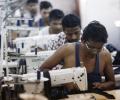
That prompted manufacturers to add jobs for the first time since June.

The survey showed firms' confidence regarding future business grew at the slowest pace in a year last month.

The survey showed firms passed on a greater cost burden to consumers. Prices charged rose at their fastest pace since October.

Monetary policy easing, coupled with the relaxation of lending rules and greater election-driven fiscal spending in the first quarter of 2019, will provide some support to growth during the first half of 2019-20 fiscal
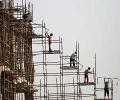
The HSBC Manufacturing Purchasing Managers' Index, compiled by Markit, fell to 52.4 in August from 53.0 in July but chalked up its tenth month above the 50 mark that divides growth from contraction.

A reading above 50 represents expansion while one below means contraction.

The market breadth in BSE remains positive with 1,554 shares advancing and 1,196 shares declining.

The official survey focuses more on larger firms.

The Nikkei India Manufacturing Purchasing Managers' Index (PMI) stood at 47.9 in July, down from 50.9 in June, its lowest mark since February 2009, and highlighted the first deterioration in business conditions in 2017 so far.

A reading below 50 means contraction in the sector.

A reading below 50 means contraction in the sector.

The HSBC Services Purchasing Managers' Index , compiled by Markit, fell to 50.6 in August from 52.2 in July.

The survey noted that advertising campaigns supported the increase in new work growth in the sector amid competitive pressures.
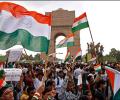
India's private sector activity contracted further in August, reflecting faster contractions of both manufacturing and services output, amid decline in new orders and tough economic conditions.

Chinese automakers Great Wall Motors, FAW Haima Automobile, and Changan Automobile, after dithering about entering India for some years, have been encouraged by the robust sales performance of the late entrants Kia Motors and MG Motors even in a slowing market.
New York's main contract, West Texas Intermediate for February delivery, was up 22 cents at USD 98.64 in mid-morning trade while Brent North Sea crude for February rose 17 cents to $ 110.97.

Faced with allegations that included bribery and violation of sovereignty, Park was accused of colluding with Choi to secure millions of dollars in bribes from the country's biggest enterprises and allowing Choi, a civilian, to interfere in state affairs. Park had apologized, but denied any wrongdoing.

Data for the four largest emerging economies showed contrasting activity trends in November. China registered growth for the seventh month running, while India posted the fastest growth since June.

Economic recovery in US, euro zone help; new orders sub-index at 52.4

The Nikkei India Services Purchasing Managers' Index, which tracks the services sector firms on a monthly basis, stood at 50.3 in February, up from 48.7 registered in January.
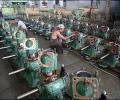
HSBC PMI falls to 50.7, slow domestic demand offsets pick up from abroad.
Manufacturing production growth eased in May, which combined with the slowdown in services resulted in a weaker increase in private sector output, the survey said.

The Nikkei India Manufacturing PMI dipped from 50.3 in November to 49.1 in December.

The HSBC Emerging Markets Index, a monthly indicator derived from the PMI surveys, inched up to 50.4 in April, from 50.3 in March, signalling only a marginal increase in output across global emerging markets in April.
Strong new business growth was the primary factor.

India's growth presents a win-win partnership for the country and the US, and American companies have a great opportunity to contribute to that, Modi told the CEOs.

The index has posted below the 50 mark, which marks contraction, for the third consecutive month.

The HSBC/Markit purchasing managers index for the manufacturing industry stood at 50.1 in July, slightly more than 50.3 in June, indicating a broad stagnation of manufacturing operating conditions in India.
China posted the sharpest increase in output for 15 months, while India saw the steepest expansion since February 2013.
 © 2026 Rediff.com - Advertise with us - Disclaimer - Privacy Policy - Sitemap - Feedback - About us - Terms of use - Grievances